8 Easy Ways How to Spot Aphid Infestations
Aphids cluster in hidden places, feeding silently on tender new growth until your plants begin to curl and yellow. Learning how to spot aphid infestations early determines whether you intervene with a simple water spray or face widespread crop damage. These soft-bodied insects reproduce asexually during peak season, with a single female generating 80 offspring per week. The first sign often appears as sticky honeydew residue on leaves below feeding sites, followed by sooty mold growth and distorted foliage.
Materials
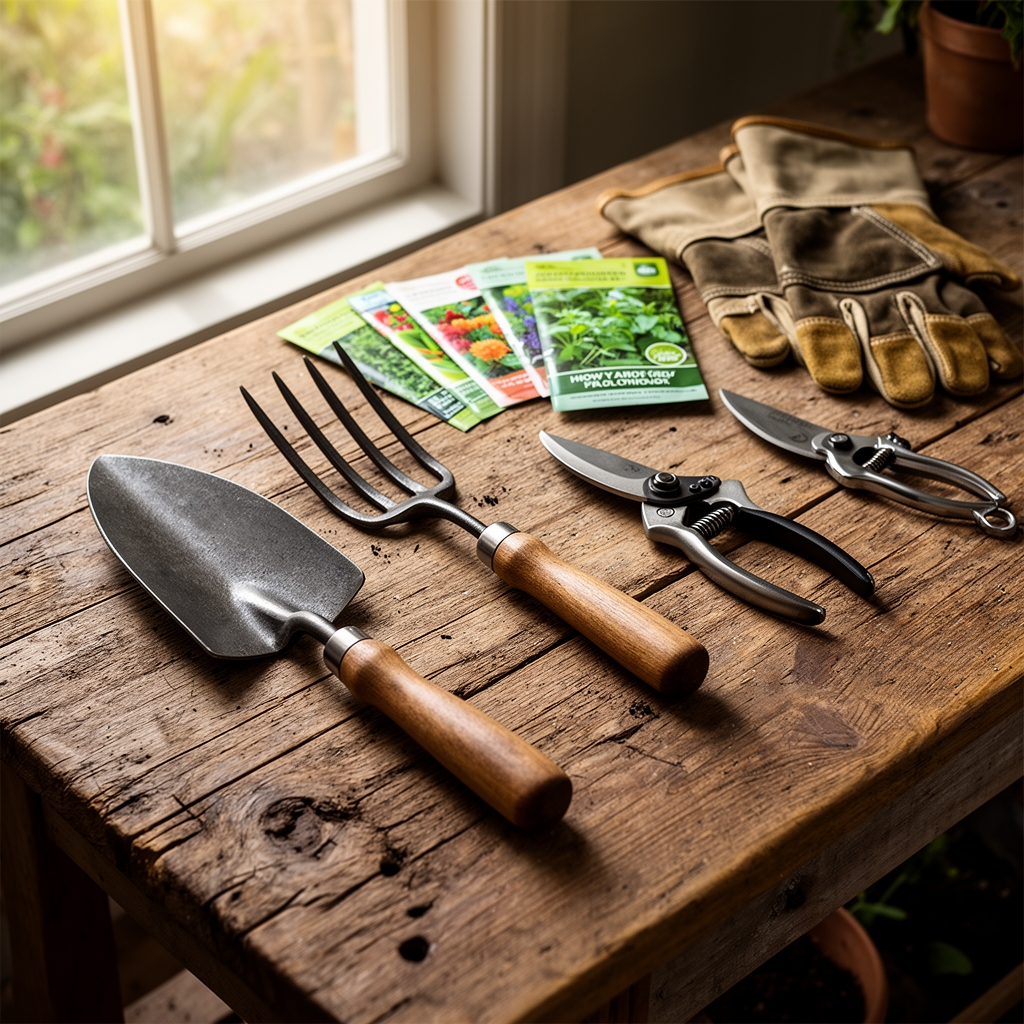
Effective aphid detection requires minimal equipment but specific tools amplify accuracy. A 10x hand lens reveals individual aphids measuring 1-3mm in length, exposing their pear-shaped bodies and twin cornicles. Yellow sticky traps (3×5 inch cards) monitor winged aphid migration, with optimal placement 6 inches above canopy height. Neem oil concentrate (70% clarified hydrophobic extract) serves as both diagnostic spray and treatment, requiring emulsification at 2 tablespoons per gallon of water adjusted to pH 6.5-7.0.
Insecticidal soap at 2% potassium salt concentration provides immediate knockdown for confirmed infestations. A spray bottle with fine mist setting (0.2mm droplet size) ensures thorough coverage of leaf undersides where colonies establish. Cotton swabs dipped in isopropyl alcohol (70% solution) remove test specimens without contaminating surrounding tissue. Balanced organic fertilizer at 4-4-4 or 5-5-5 NPK ratio maintains plant vigor, reducing aphid preference for nitrogen-flush growth that occurs with high-N synthetic feeds above 10-5-5 formulations.
Timing
Hardiness zones 3-6 experience peak aphid pressure from late May through July as overwintered eggs hatch when forsythia blooms fade. Zones 7-9 face year-round populations with spring and fall spikes, particularly when daytime temperatures stabilize between 65-80°F. Zone 10-11 gardeners encounter continuous low-level infestations that surge during brief cool periods from December through February.
Begin weekly inspections two weeks before your last spring frost date. Aphids colonize transplants moved outdoors prematurely, exploiting the 10-14 day window when auxin distribution concentrates in new growth. Fall monitoring intensifies six weeks before first frost as aphids produce sexual forms that mate and lay overwintering eggs on woody stems. Southern growers should inspect every 10 days during winter months when temperatures remain above 50°F for three consecutive days.
Phases

Early Detection Phase
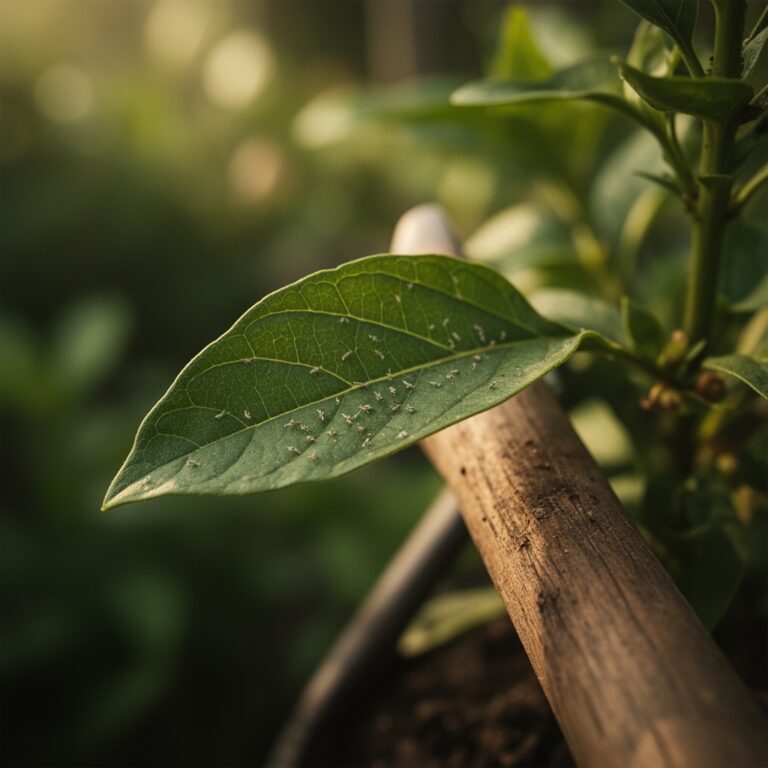
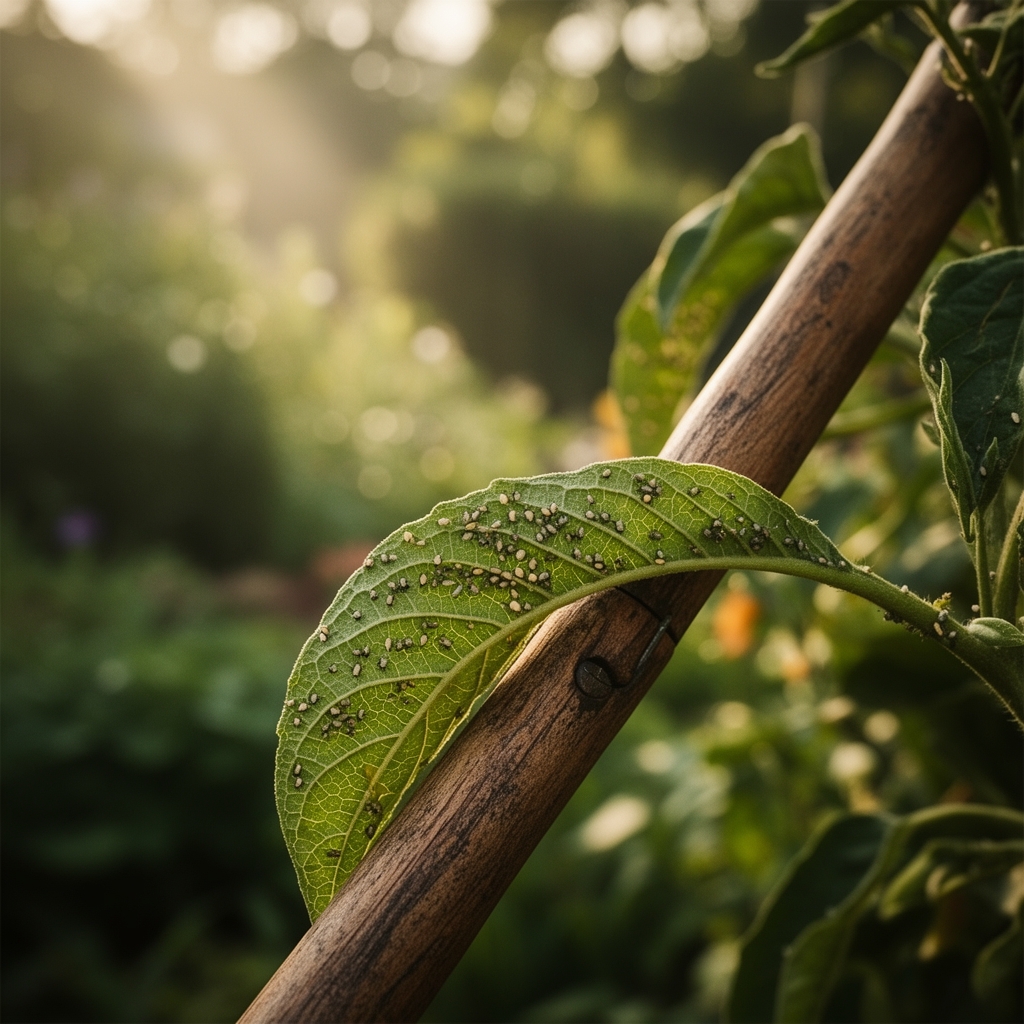
Examine the underside of the newest three leaves on each plant. Aphids congregate on tissue less than seven days old where cell walls remain thin and phloem sap flows most freely. Look for white cast skins (exuviae) clinging to leaf surfaces, indicating recent molting activity. Check stem nodes and flower bud bases where colonies protect themselves within tight crevices. Shiny droplets of honeydew appear as 1-2mm beads before coalescing into sticky films.
Pro-Tip: Brush your hand across suspected foliage, then examine your palm. Live aphids transfer as slow-moving specks while harmless dust wipes clean.
Population Assessment Phase
Count aphids on five representative leaves to establish infestation severity. Light infestations show 1-5 aphids per leaf. Moderate levels reach 6-20 per leaf with visible honeydew. Heavy infestations exceed 20 aphids per leaf with ants actively farming the colony. Document aphid color (green, black, pink, white, or woolly-coated) because species identification guides treatment timing. Green peach aphids vector 100+ plant viruses while rosy apple aphids cause primarily physical damage.
Inspect neighboring plants within a 10-foot radius. Aphids walk 3-6 feet per day and winged forms travel 50+ feet when colonies overcrowd. Check common alternate hosts including dock, lambsquarters, and shepherd's purse growing near cultivated beds.
Pro-Tip: Photograph infested leaves against white paper with a ruler for scale. Compare weekly images to track population doubling time, which averages 5-7 days at 70°F.
Damage Confirmation Phase
Leaf curling perpendicular to the midrib indicates active feeding within the curl. Aphid saliva disrupts normal cell expansion, creating permanent distortion even after pest removal. Yellow stippling in irregular patterns differs from spider mite damage, which creates uniform pale dots. Black sooty mold grows on honeydew, blocking 30-40% of photosynthetic capacity within 10 days of establishment.
Pro-Tip: Press a white tissue against suspected honeydew deposits. Sugary aphid excretions dissolve partially and feel tacky, while similar-looking fungal spores remain powdery and dry.
Troubleshooting
Symptom: Curled leaves without visible insects.
Solution: Aphids hide inside curls. Carefully unfold tissue or slice open with clean blade. Colonies of 50+ individuals often occupy a single curled leaf. Apply insecticidal soap at 40 psi pressure to penetrate curled structures.
Symptom: Ants trailing up plant stems.
Solution: Ants farm aphids for honeydew, protecting them from predators. Apply 1-inch band of horticultural tanglefoot at stem base 6 inches above soil line. Eliminate ant access within 48 hours, allowing natural predators to reduce aphid populations by 60-80%.
Symptom: White fuzzy coating on stems resembling mold.
Solution: Woolly aphids secrete waxy filaments for protection. This species embeds feeding stylets deeper than smooth aphids, requiring systemic treatment. Spray with neem oil every 5 days for three applications, ensuring coverage of all waxy material.
Symptom: Yellowing between leaf veins with sticky residue.
Solution: Chronic aphid feeding depletes phloem nutrients while injecting toxic saliva. Remove heavily damaged leaves below the infestation to reduce viral reservoir. Apply foliar kelp spray (1:500 dilution) to support cation exchange capacity and accelerate recovery of photosynthetic tissue.
Symptom: Sudden aphid disappearance with brown mummies attached to leaves.
Solution: Parasitic wasps have colonized the aphid population. Each mummy contains a developing wasp larva. Leave mummies in place and avoid broad-spectrum insecticides for 14 days. Emerged wasps will parasitize remaining aphids at 20-30 individuals per day per female wasp.
Maintenance
Inspect plants every 3-4 days during active growth periods from bud break through flowering. Check 10% of your total plant population as sentinel monitoring, focusing on species with known aphid preference: roses, beans, brassicas, and cucurbits. Spray plants with water at 30 psi pressure every 5 days to dislodge early colonizers before populations establish. Target leaf undersides with a 45-degree angle approach.
Maintain soil nitrogen below 150 ppm through regular testing every 30 days. Excess nitrogen produces lush growth with elevated amino acid concentrations that attract aphids from 100+ feet distance. Apply compost at 0.5 inches per season rather than synthetic nitrogen to support gradual nutrient release. Introduce mycorrhizal fungi at transplanting (500 spores per cubic inch of root zone) to enhance phosphorus uptake, which strengthens cell walls against piercing mouthparts.
Space plants according to mature width specifications to ensure air circulation exceeds 2 mph at canopy level. Stagnant air below 1 mph encourages aphid settlement and reproduction. Prune water sprouts at 60-degree angles to branch collars, eliminating succulent vertical growth that concentrates aphid colonies.
FAQ
How quickly do aphid populations grow?
At 70°F, aphid populations double every 5 days. A single aphid can produce 600 billion descendants in one season under optimal conditions, though predation and environmental factors reduce actual numbers to 1-5% of theoretical maximum.
Can aphids damage plants permanently?
Aphid feeding rarely kills established plants but causes permanent leaf distortion and transmits incurable viral diseases including cucumber mosaic and bean yellow mosaic. Yield losses range from 20-50% in heavily infested vegetable crops.
What attracts beneficial insects that eat aphids?
Plant alyssum, dill, fennel, and yarrow within 15 feet of susceptible crops. These provide nectar for adult lacewings and parasitic wasps. Each lacewing larva consumes 200-600 aphids during its 2-3 week development period.
Do aphids prefer certain plant colors?
Research shows aphids orient toward yellow-green foliage reflecting 550nm wavelength light. Reflective silver mulch disorients aphids by bouncing UV light, reducing colonization by 40-60% compared to bare soil or dark mulch.
When should I use chemical controls?
Apply insecticidal soap when counts exceed 15 aphids per leaf or when 25% of plants show infestation. Spray early morning when temperatures reach 55-75°F. Avoid applications above 85°F, which causes phytotoxicity in heat-stressed plants.