6 Easy Steps to Plant Columnar Apples
The narrow silhouette of a columnar apple tree rising from a container on a balcony proves that fruit production no longer requires a sprawling orchard. These upright cultivars, bred from the McIntosh mutation 'Wijcik,' produce full-sized apples on spurs that hug a single vertical trunk. Mastering the steps to plant columnar apples transforms even the smallest urban space into a productive microclimate, provided you address root architecture, nutrient cycling, and precise timing from the start.
Materials for Planting Columnar Apples
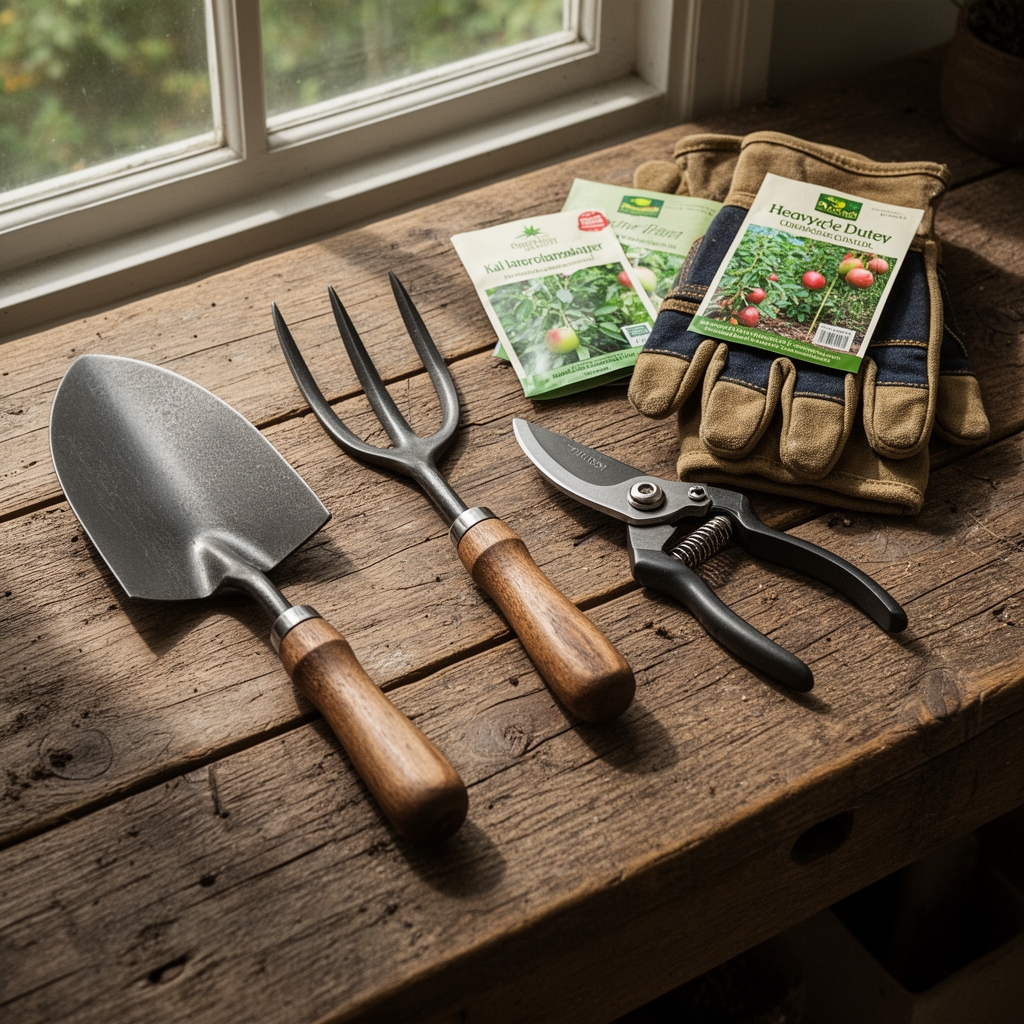
Select a bare-root or container-grown tree on M.9 or M.26 rootstock. M.9 restricts height to 8 feet and induces early fruiting. M.26 adds another 2 feet of vigor and tolerates heavier soils better.
Prepare compost amended with a 4-4-4 organic fertilizer blend. This balanced NPK ratio supplies nitrogen for foliar growth, phosphorus for root establishment, and potassium for disease resistance. Avoid high-nitrogen synthetic blends above 10-5-5 during planting; excess nitrogen delays fruiting and promotes soft, pest-susceptible tissue.
Adjust soil pH to 6.0 to 6.5 using dolomitic lime if your test reveals acidity below 5.8. Columnar apples exhibit iron chlorosis and poor calcium uptake in alkaline conditions above pH 7.2. Incorporate sulfur at 1 pound per 100 square feet to lower pH by approximately 0.5 units.
Acquire mycorrhizal inoculant containing Rhizophagus irregularis. This arbuscular mycorrhizal fungus colonizes apple roots and extends the effective absorptive surface area by 10 to 100 times, improving phosphorus and micronutrient uptake in exchange for photosynthates.
Gather a 2-inch layer of shredded hardwood mulch, a 5-foot bamboo stake, and soft cloth ties. Avoid wire or narrow twine that girdles the cambium as the trunk expands.
Timing and Hardiness Zones
Plant bare-root columnar apples in early spring, 2 to 4 weeks before the last expected frost date. In USDA Hardiness Zones 4 through 8, this window typically spans late March through mid-April. Soil temperature should reach 45°F at a 6-inch depth to stimulate feeder root elongation.
Container-grown trees tolerate planting through early summer, but avoid transplanting during bloom or when daytime temperatures exceed 85°F. Heat stress disrupts auxin distribution, causing root dieback and delayed establishment.
In Zones 9 and 10, plant in late autumn or winter to allow root development before summer heat. Columnar apples require 400 to 600 chill hours below 45°F; cultivars like 'Scarlet Sentinel' and 'Golden Sentinel' meet this threshold in mild-winter regions.
Planting and Establishment Phases
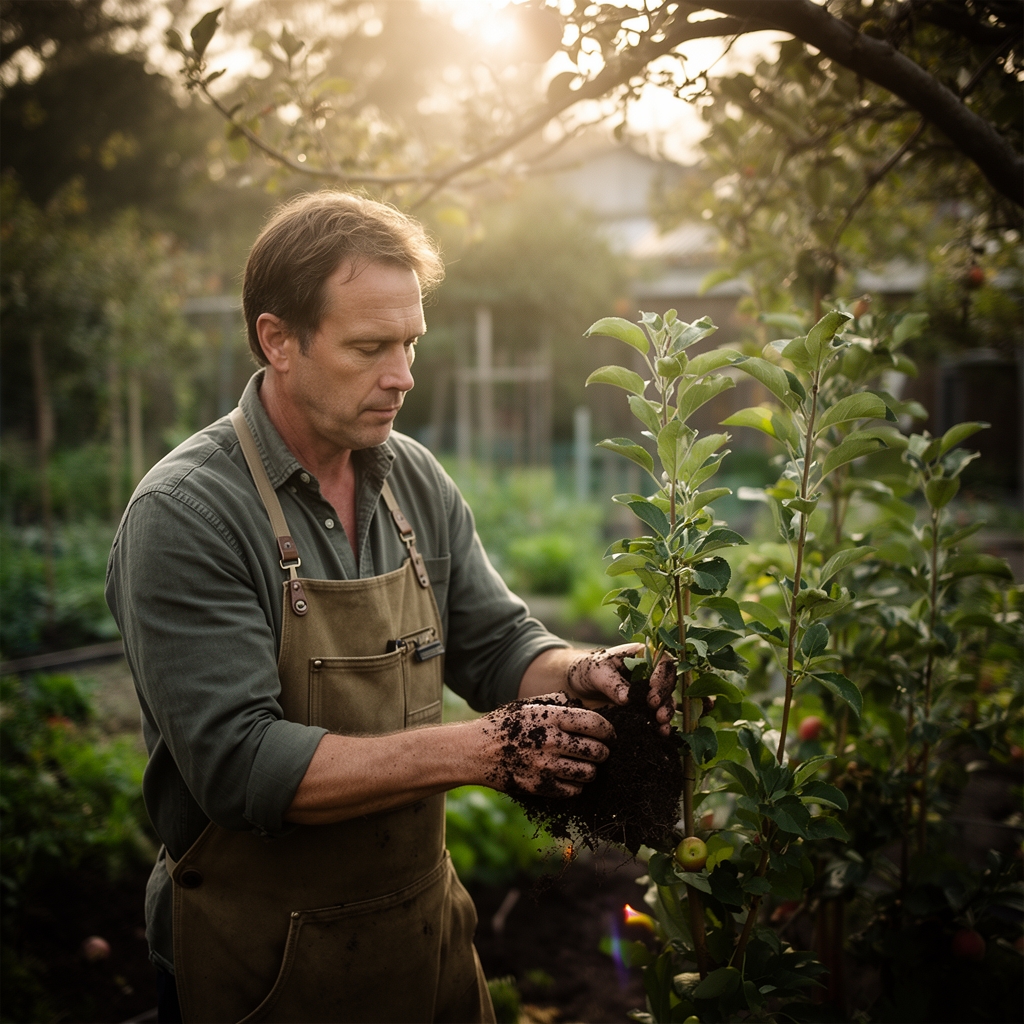
Phase 1: Site Preparation
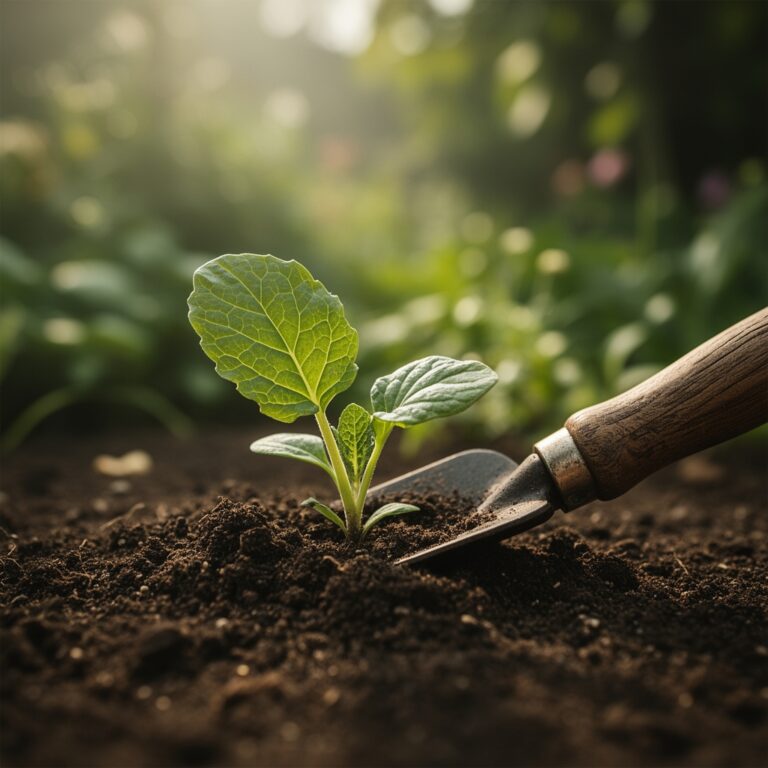
Excavate a hole 18 inches deep and 24 inches wide. Break up compacted subsoil to improve drainage and oxygen diffusion. Poor aeration suffocates feeder roots and encourages Phytophthora root rot.
Mix excavated soil with 30 percent compost by volume. Incorporate 2 tablespoons of mycorrhizal inoculant directly into the planting mix. Ensure the inoculant contacts roots; surface application reduces colonization rates by 60 percent.
Pro-Tip: Test cation exchange capacity (CEC) before planting. Soils with CEC below 10 meq/100g benefit from the addition of 1 inch of aged manure to buffer nutrient leaching.
Phase 2: Root Placement
Position the graft union 2 inches above the final soil line. Burying the union allows the scion to form its own roots, negating the dwarfing effect of the rootstock and producing a standard-sized tree.
Spread roots radially in the hole. Prune any circling or damaged roots with sterile shears at a 45-degree angle to stimulate lateral branching. Backfill in 4-inch lifts, tamping gently to eliminate air pockets without compacting the soil structure.
Water with 2 gallons immediately after backfilling to settle soil around roots. Avoid creating a basin; pooled water encourages crown rot.
Pro-Tip: Inoculate the planting hole with Trichoderma harzianum powder at 1 gram per tree. This biocontrol fungus colonizes root surfaces and inhibits Armillaria and Phytophthora pathogens.
Phase 3: Staking and Mulching
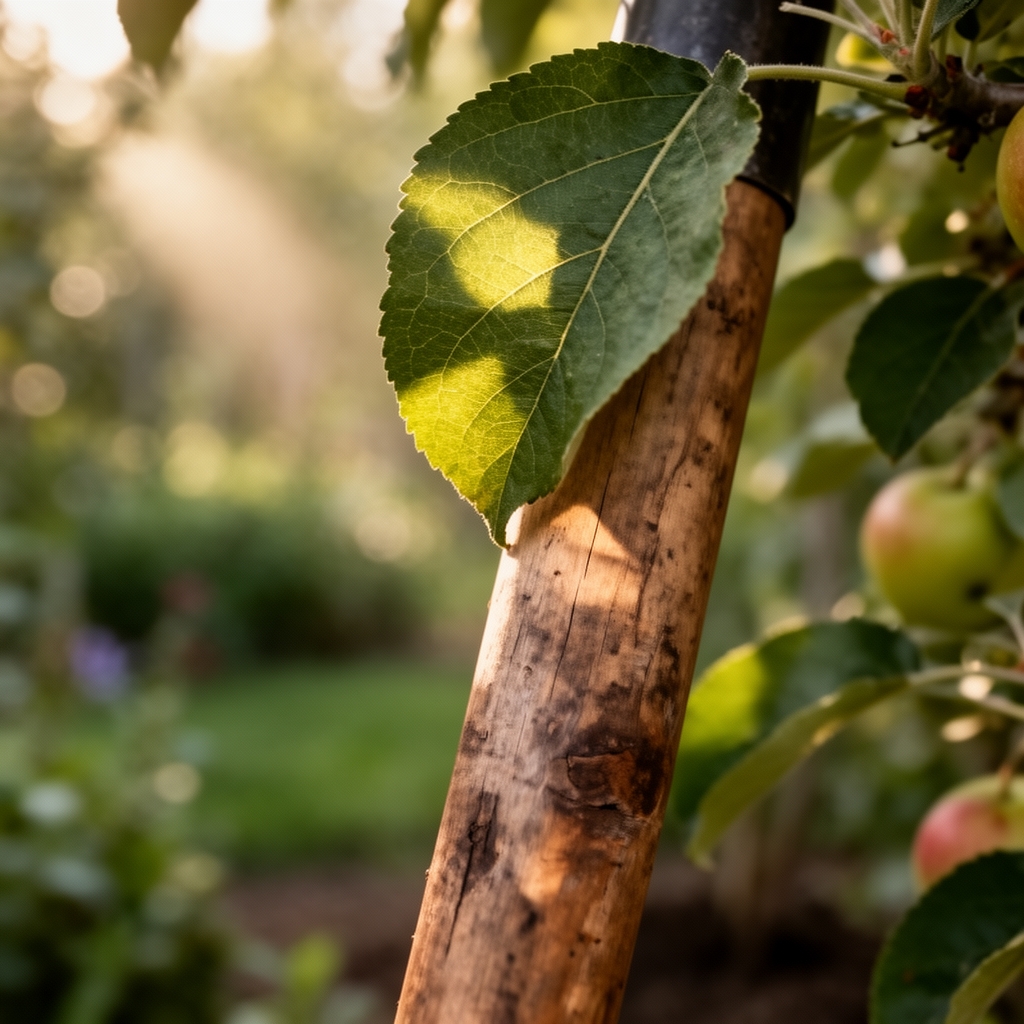
Drive a bamboo stake 12 inches into undisturbed soil 6 inches from the trunk. Secure the tree with a figure-eight cloth tie at 18 inches above ground. This method prevents bark abrasion while allowing the trunk to flex, which stimulates caliper growth and lignin deposition.
Apply a 2-inch layer of shredded hardwood mulch in a 3-foot diameter around the base. Keep mulch 4 inches away from the trunk to prevent collar rot and vole nesting.
Pro-Tip: Top-dress with 1/4 cup of kelp meal in a 12-inch ring around the dripline. Kelp supplies cytokinins and trace minerals that enhance stress tolerance during the first growing season.
Troubleshooting Common Disorders
Symptom: Yellowing leaves with green veins (interveinal chlorosis) in upper canopy.
Solution: Iron deficiency due to high pH or poor drainage. Apply chelated iron (Fe-EDDHA) as a soil drench at 1 tablespoon per gallon. Retest soil pH and amend with sulfur if above 7.0.
Symptom: Brown, sunken lesions on fruit beginning at the calyx end.
Solution: Bitter pit caused by calcium deficiency or erratic watering. Spray foliage with calcium chloride at 0.5 percent concentration every 10 days from petal fall through 3 weeks before harvest. Maintain consistent soil moisture.
Symptom: Sticky honeydew on leaves and black sooty mold.
Solution: Aphid infestation. Release Aphidius colemani parasitoid wasps at 1 per square foot of canopy or spray insecticidal soap (2 percent potassium salts of fatty acids) every 5 days for 3 applications.
Symptom: Premature fruit drop 4 to 6 weeks after bloom.
Solution: June drop exacerbated by drought stress or inadequate pollination. Ensure cross-pollination with a compatible variety (e.g., 'Northpole' with 'Golden Sentinel'). Apply 1 inch of water weekly during fruit set.
Symptom: Wilting shoots with shepherd's crook appearance and oozing cankers.
Solution: Fire blight (Erwinia amylovora). Prune infected tissue 12 inches below the visible lesion during dry weather. Sterilize tools with 10 percent bleach between cuts. Apply streptomycin spray at 100 ppm during bloom in high-risk years.
Maintenance Schedule
Water columnar apples with 1 inch per week from bud break through harvest, increasing to 1.5 inches during fruit swell. Use drip irrigation or soaker hoses to minimize foliar wetness and fungal disease.
Fertilize in early spring with 1/2 cup of 5-10-10 granular fertilizer per tree, broadcast in a 2-foot ring around the dripline. Repeat in mid-June at half rate. Cease nitrogen applications after July 1 to promote hardening before dormancy.
Prune only to remove dead, diseased, or crossing branches. Columnar apples fruit on short spurs along the main trunk; heavy pruning eliminates fruiting wood. Maintain a height of 8 to 10 feet for easy harvest.
Thin fruit to one apple per spur when fruitlets reach 1/2 inch diameter. This practice increases fruit size and prevents biennial bearing.
Frequently Asked Questions
Do columnar apples need a pollinator?
Yes. Most columnar cultivars require cross-pollination with another apple variety that blooms simultaneously. Plant two different cultivars within 50 feet or graft a compatible scion onto the tree.
How long until columnar apples bear fruit?
Trees on M.9 rootstock produce 5 to 10 apples in the second year and reach full production of 15 to 20 pounds by year four.
Can I grow columnar apples in containers?
Yes. Use a 15-gallon container with drainage holes, a soilless mix of 50 percent peat and 50 percent perlite, and repot every 3 years to refresh the root zone.
What spacing do columnar apples require?
Space trees 2 feet apart in hedgerows or 3 feet apart for individual specimens. Narrow spacing suits intensive plantings; wider spacing improves air circulation and reduces disease pressure.
Why are my columnar apple leaves curling?
Leaf curl results from rosy apple aphid feeding or water stress. Inspect the undersides of leaves for aphid colonies. If absent, increase irrigation frequency and check soil moisture at 6-inch depth.