10 Pro Tips How to Manage Orchard Tips
Orchard tips are the actively growing terminal shoots that determine next season's fruit production, canopy shape, and overall tree vigor. Learning how to manage orchard tips begins with recognizing that these meristematic zones respond to hormone gradients, nutrient availability, and physical training within critical windows. Every cut, bend, or nutrient pulse you deliver alters auxin distribution and redirects the tree's energy budget. Neglect them in July, and you'll spend three years correcting the architecture.
Materials
Successful tip management requires tools and amendments matched to your soil chemistry. Test your orchard soil for pH and cation exchange capacity before selecting fertilizers.
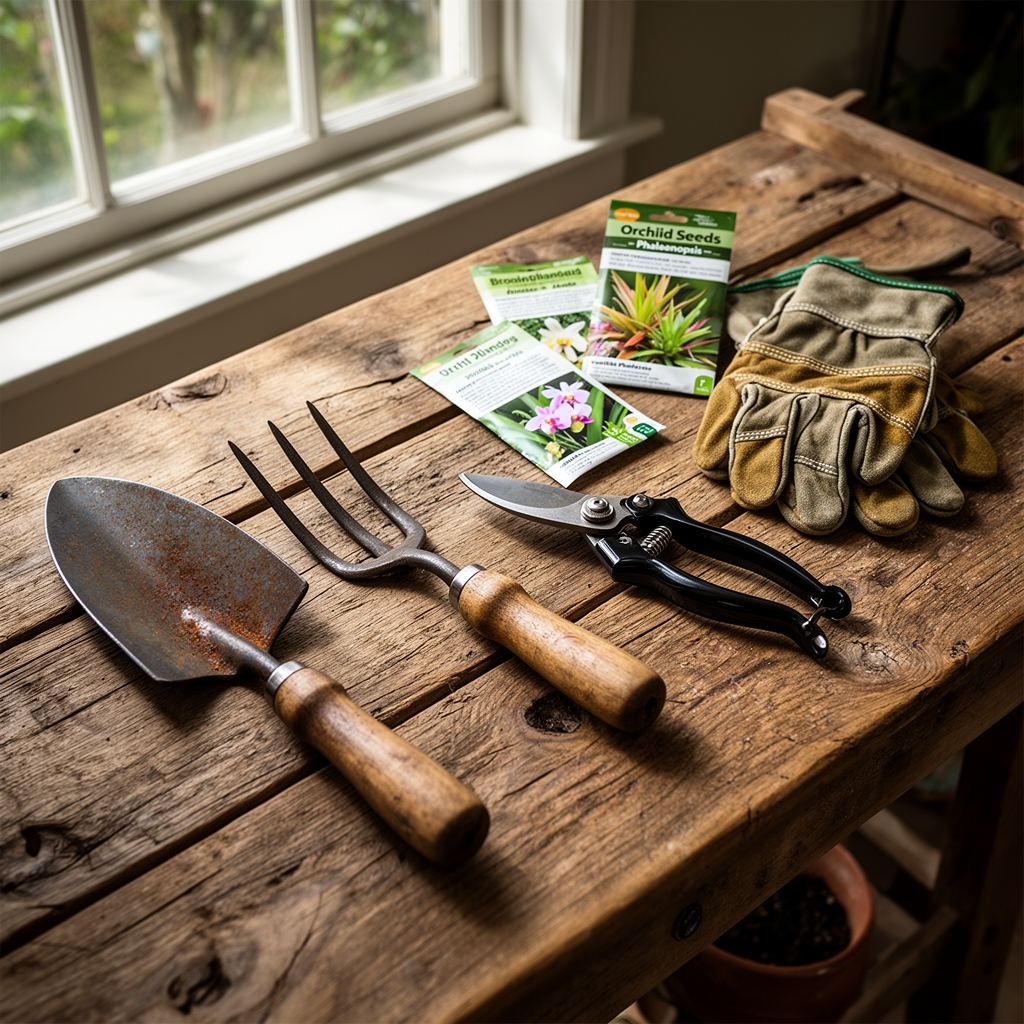
Pruning and Training Tools:
- Bypass pruners (Felco #2 or equivalent) for cuts up to 0.75 inches
- Spreaders or clothespins for adjusting shoot angles between 45 and 60 degrees
- Soft tree ties (avoid wire that girdles cambium)
Soil Amendments by Target pH:
- Acidic soils (pH 5.0-6.0): Apply 5-10-10 fertilizer at 0.5 lb per inch of trunk diameter in early spring
- Neutral soils (pH 6.0-7.0): Use balanced 4-4-4 organic meal blended with feather meal for slow nitrogen release
- Alkaline soils (pH 7.0-8.0): Incorporate elemental sulfur at 2 lb per 100 square feet the season prior; switch to ammonium sulfate (21-0-0) for nitrogen
Biological Inoculants:
- Mycorrhizal fungi (Glomus intraradices) at transplant
- Compost tea with active bacterial count above 500 µg/mL for foliar applications
Timing
Orchard tip management follows three phenological windows tied to hardiness zones and local frost dates.
Zone 5-6: Last frost typically occurs May 1-15. Begin training new tips in late May when shoots reach 6-8 inches. Summer topping occurs June 20-July 10 when terminal growth exceeds 18 inches. Cease all nitrogen applications by August 1 to promote hardening before first frost (September 20-October 5).
Zone 7-8: Last frost arrives April 1-15. Start tip training by mid-April. Summer management extends through July 25. Nitrogen cutoff moves to August 15.
Zone 9-10: Minimal frost risk allows year-round manipulation. Focus tip management during the two weeks following winter chill accumulation (300-600 hours below 45°F depending on cultivar). High desert and coastal orchards require distinct timing; high desert benefits from late-winter heading cuts, while coastal orchards need summer suppression of excessive vegetative growth.
Phases

Sowing and Grafting Phase
Rootstock selection governs ultimate tip vigor. Dwarfing rootstocks (M.27, Gisela 5) produce compact trees with 8-12 managed tips per scaffold. Semi-dwarf stocks (M.7, M.106) generate 15-25 tips requiring more aggressive summer suppression.
Graft union placement affects tip dominance. Position the union 2-3 inches above soil grade. Bury it, and you'll lose rootstock control, producing unmanageable watersprouts.
Pro-Tip: Apply lanolin-based grafting sealant only to the top of bench grafts. Leaving sides exposed allows gas exchange and reduces Pseudomonas infection by 40 percent compared to full coverage.
Transplanting and First-Year Establishment
Prune whips to 28-32 inches at planting to force lateral break at predictable heights. Remove all shoots below 18 inches; these become sucker drains. Select 3-5 scaffolds spaced radially around the trunk during the first dormant season.
First-year tip management emphasizes angle over length. Spreaders inserted between trunk and shoot create 50-60 degree crotch angles that maximize fruit spur formation along the limb. Narrow angles (less than 35 degrees) produce vegetative watershoots instead of fruiting wood.
Pro-Tip: Notching above dormant buds forces shoot emergence at precise locations. Make a single cut through the bark and into sapwood 0.25 inches above the target bud. This interrupts basipetal auxin flow and triggers bud break in 80 percent of notched sites.
Second-Year to Mature Tree Management
As trees enter bearing age, tip vigor declines naturally. Maintain moderate annual extension growth of 10-14 inches by adjusting nitrogen rates. Excessive tip growth (over 24 inches) indicates overfertilization or incorrect rootstock pairing.
Summer topping controls tree height and redirects carbohydrates into fruit sizing. Head back terminals to 5-6 leaves once shoots exceed 18 inches, typically late June in most zones. This practice increases fruit weight by 12-18 percent in trials comparing topped versus untopped trees.
Pro-Tip: Differential topping manages biennial bearing. On heavy crop years, top aggressively to reduce vegetative competition. On light years, allow 20-30 percent more extension growth to build return bloom.
Troubleshooting
Symptom: Blind wood (no buds breaking along one-year shoots)
Solution: Increase summer topping frequency to every 10-12 inches of growth. Apply foliar calcium nitrate at 2 lb per 100 gallons during active shoot growth to promote lateral meristem differentiation.
Symptom: Fireblight strikes (shepherd's crook terminals with blackened tips)
Solution: Prune 12 inches below visible infection into healthy wood. Disinfect tools between cuts in 10 percent bleach solution. Reduce nitrogen to below 0.1 lb actual N per tree per year of age. Avoid tip manipulation during bloom when Erwinia bacteria spread through nectaries.
Symptom: Watersprouts erupting from upper scaffold surfaces
Solution: Indicates excessive heading cuts or shading of lower canopy. Thin canopy to allow 40-50 percent light penetration to interior. Remove watersprouts when less than 4 inches long by rubbing off with a gloved hand. Established sprouts require dormant removal.
Symptom: Tip dieback with brown, dried terminals (no pathogen present)
Solution: Drought stress or root hypoxia from saturated soils. Check soil moisture at 12-18 inch depth. Clay soils require drainage correction with tile or raised berms.
Symptom: Rosetting (tight leaf clusters, minimal internode extension)
Solution: Zinc deficiency. Apply foliar zinc sulfate at 3 lb per 100 gallons plus 1 lb urea as a sticker. Soil applications require 5 lb zinc sulfate per tree broadcast under the drip line.
Maintenance
Irrigation schedules affect tip growth rates directly. Young trees require 1.5 inches per week during active growth (May through July). Mature trees need 1 inch per week, delivered in two 0.5-inch applications to maintain consistent soil moisture at 60-80 percent field capacity.
Mulch 4 inches deep in a ring extending 12 inches beyond the drip line. Keep mulch 6 inches away from the trunk to prevent crown rot. Aged wood chips provide slow nitrogen release and suppress competing vegetation that would steal mobile nutrients during tip elongation.
Foliar nutrient sprays penetrate young tip tissue efficiently. Apply soluble boron at 0.5 lb per 100 gallons during pink bud to support cell wall formation in new growth. Chelated iron (6 percent Fe-EDDHA at 1 lb per 100 gallons) corrects chlorosis in alkaline soils when sprayed on expanding leaves.
Renew training ties every 6-8 weeks during the growing season. Limbs lignify and set angles within 8-10 weeks; remove spreaders once wood hardens to prevent girdling.
FAQ
How often should I tip-prune during summer?
Once when shoots reach 18 inches, then again if regrowth exceeds 12 inches. Most zones require two passes: late June and mid-July.
Can I manage orchard tips organically?
Yes. Substitute feather meal (12-0-0) and bone meal (3-15-0) for synthetic fertilizers. Use neem or spinosad for pest pressure on tender tips.
What angle produces the most fruit spurs?
50-60 degrees from vertical. Wider angles delay bearing; narrower angles produce vegetative growth and weak crotches prone to splitting.
Do I need to manage tips on dwarf rootstocks?
Yes, but less aggressively. Dwarf stocks self-limit vigor. Focus on angle correction and removing inward-growing tips rather than height suppression.
When do I stop training tips on mature trees?
After year five for dwarf rootstocks, year seven for semi-dwarf. Mature trees require only corrective pruning and watersprout removal rather than active tip manipulation.