10 Pro Tips How to Grow Patio Fruits
Picking sun-warmed strawberries from a terra-cotta pot on a July afternoon proves that space constraints need not limit harvest ambition. Learning how to grow patio fruits transforms balconies, porches, and postage-stamp courtyards into productive micro-orchards. Dwarf cultivars and container-adapted rootstocks now make it possible to cultivate citrus, figs, blueberries, and stone fruits in vessels no larger than fifteen gallons, delivering fresh yields within arm's reach of the kitchen.
Materials
Successful patio fruit production begins with substrate engineering. A soilless mix combining 40% aged pine bark, 30% Canadian sphagnum peat, 20% perlite, and 10% worm castings provides the porosity and cation exchange capacity essential for root oxygenation and nutrient retention. Target a pH range of 5.5 to 6.5 for blueberries and 6.0 to 7.0 for most other fruits. Incorporate a slow-release organic amendment rated at 4-4-4 or 5-5-5 during potting, applied at 2 tablespoons per gallon of substrate volume.
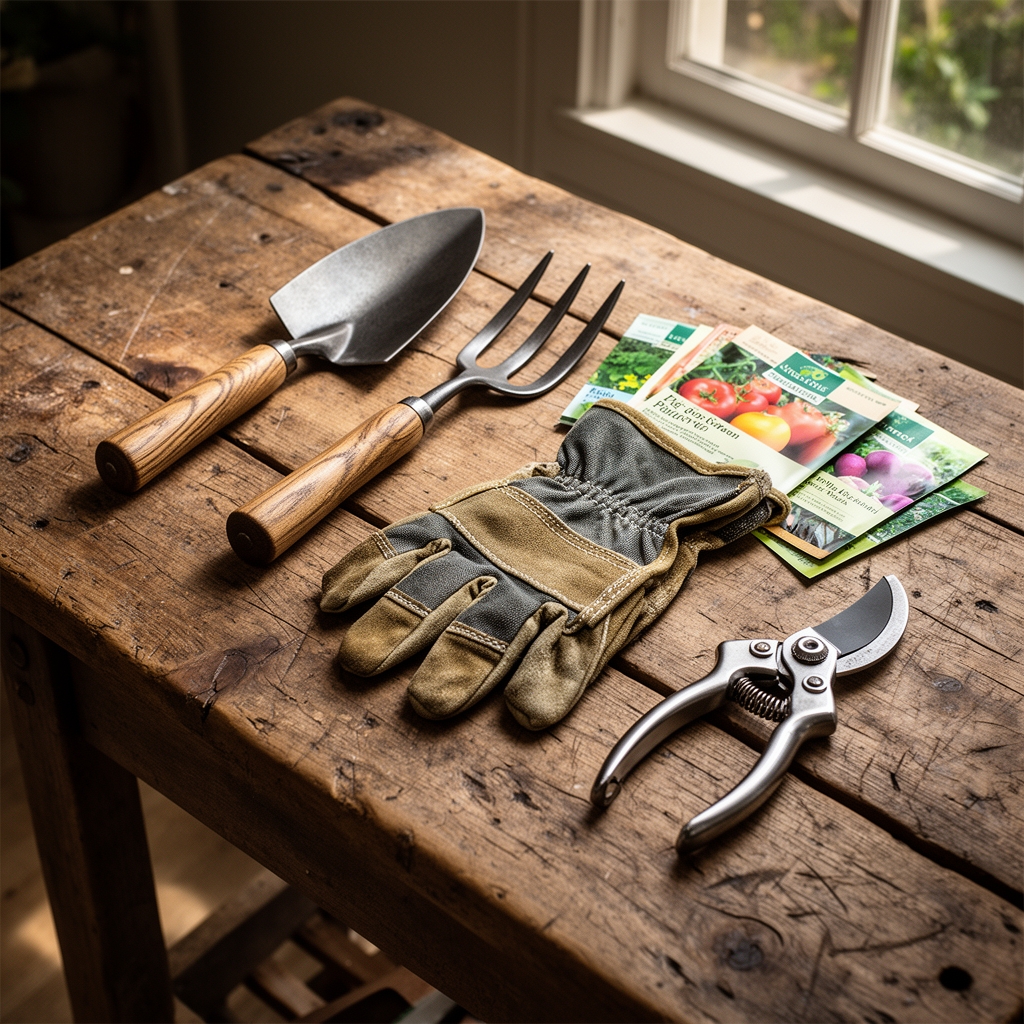
Container selection dictates root zone temperature and moisture buffering. Glazed ceramic or resin pots with drainage holes measuring at least 18 inches in diameter suit most dwarf fruit trees. Fabric grow bags excel for blueberries and brambles, promoting air-pruning that increases fibrous root density. Avoid black containers in USDA Hardiness Zones 8 and above; root zone temperatures can exceed 110°F under direct sun, damaging feeder roots and mycorrhizal networks.
Granular mycorrhizal inoculant applied at transplant improves phosphorus uptake by 30 to 40 percent. Choose formulations containing Glomus intraradices and Rhizophagus irregularis. Supplement with liquid kelp extract bi-weekly during active growth to supply cytokinins and natural auxins that regulate apical dominance and fruit set.
Timing
Patio fruit establishment aligns with regional frost-free dates and dormancy cycles. In Zones 7 through 10, plant bareroot stock between January and March while trees remain dormant. Container-grown specimens tolerate year-round planting but establish most efficiently six weeks before last spring frost. Zones 4 through 6 demand May planting to avoid late freezes that damage emerging flower buds.
Chilling hour accumulation determines cultivar selection. Low-chill varieties such as 'Bonanza' peach (150 to 200 hours below 45°F) suit Zone 9 patios. 'North Star' cherry requires 800 to 1,000 chill hours, limiting its range to Zone 5 and colder. Verify local microclimate data; urban heat islands reduce effective chill accumulation by 100 to 150 hours compared to rural sites at the same latitude.
Phases
Sowing
Most patio fruit production relies on grafted or rooted cuttings rather than seed. Strawberries and alpine varieties propagate readily from runners pinned into adjacent 4-inch pots filled with moistened vermiculite. Blueberry softwood cuttings taken in June root within eight weeks when dipped in 3,000 ppm indole-3-butyric acid and placed under intermittent mist. Seed-grown citrus requires five to seven years to bear, making nursery grafts the practical choice.
Pro-Tip: Inoculate bareroot stock by soaking roots in a slurry of mycorrhizal powder and water (1 tablespoon per quart) for 15 minutes before potting. This ensures hyphal colonization of root hairs within 72 hours.
Transplanting
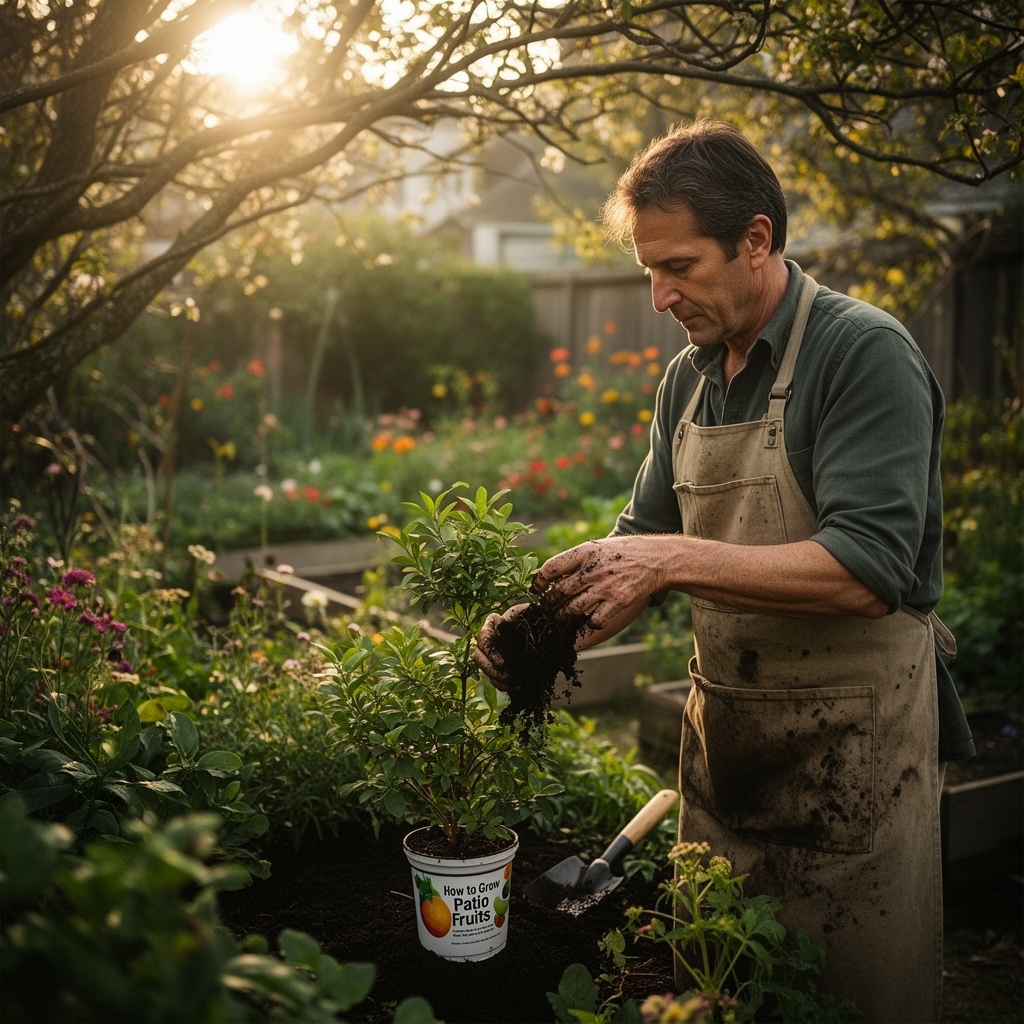
Position the graft union 2 inches above the substrate surface to prevent scion rooting, which negates dwarfing rootstock benefits. Tamp substrate firmly to eliminate air pockets that desiccate fine roots. Water immediately with a starter solution containing 1 tablespoon of fish emulsion per gallon to jump-start microbial activity around the rhizosphere.
Orient the container to receive six to eight hours of direct sunlight. South-facing exposures optimize photosynthetic efficiency. Use a wheeled plant caddy for specimens exceeding 50 pounds to facilitate seasonal repositioning.
Pro-Tip: Prune scaffold branches to outward-facing buds at a 45-degree angle. This redirects auxin distribution, promoting horizontal branching that increases light interception and simplifies harvest.
Establishing
First-year energy allocation favors root expansion over fruit production. Remove 80 percent of flowers during the inaugural season to strengthen root architecture. By year two, allow 50 percent of blooms to set fruit. Full production capacity arrives in year three for most dwarf cultivars.
Monitor new shoot growth as an establishment indicator. Extension of 8 to 12 inches per season signals adequate nitrogen availability. Excessive vegetative growth (more than 18 inches) suggests nitrogen surplus, which delays fruiting and increases disease susceptibility.
Pro-Tip: Apply a 1-inch layer of composted pine bark mulch to moderate substrate temperature swings and suppress weed germination. Keep mulch 3 inches away from the trunk to prevent crown rot.
Troubleshooting
Symptom: Interveinal chlorosis on new leaves.
Solution: Iron deficiency induced by high pH. Drench with chelated iron (FeEDDHA) at 1 teaspoon per gallon. Acidify substrate by incorporating elemental sulfur at 1 tablespoon per 5 gallons of mix.
Symptom: Fruit drop at pea size.
Solution: Incomplete pollination or boron insufficiency. Hand-pollinate using a soft brush during bloom. Foliar-spray borax solution (1 teaspoon per gallon) at early fruit set.
Symptom: Sticky honeydew on leaves; sooty mold.
Solution: Aphid or scale infestation. Spray insecticidal soap (2 tablespoons per quart) targeting leaf undersides. Release convergent ladybeetles at 1,500 per tree for biological control.
Symptom: Leaf edges brown and crispy.
Solution: Salt accumulation from over-fertilization. Leach substrate with three times the container volume of water. Reduce feeding frequency to every four weeks.
Symptom: Premature leaf drop in summer.
Solution: Water stress or root-bound condition. Increase irrigation frequency to maintain consistent moisture. Transplant into a container 4 inches larger in diameter if roots circle the perimeter.
Maintenance
Irrigate when the top 2 inches of substrate feel dry to the touch. Deliver 1 inch of water per session, equivalent to 0.6 gallons per square foot of surface area. Container drainage should occur within 30 seconds.
Feed every two weeks during active growth using a balanced liquid fertilizer diluted to half strength (e.g., 5-5-5 at 1 tablespoon per 2 gallons). Cease nitrogen applications eight weeks before first expected frost to harden wood and prevent cold damage.
Prune annually during dormancy to remove crossing branches and maintain an open center. Thin fruit to one per 6 inches of branch length to increase size and sugar content. Repot every three years, root-pruning by one-third to refresh substrate and control tree size.
FAQ
How much sun do patio fruits need?
Six to eight hours of direct sunlight daily. Less than six hours reduces yield by 40 percent and increases susceptibility to fungal diseases.
Can I grow citrus indoors during winter?
Yes. Provide supplemental light using full-spectrum LEDs at 2,000 foot-candles for 14 hours daily. Maintain nighttime temperatures above 55°F.
Why do my blueberries taste bland?
Insufficient soil acidity. Blueberries require pH 4.5 to 5.2. Amend with elemental sulfur or use an acidic fertilizer formulated for ericaceous plants.
When should I harvest strawberries?
Pick when fruits achieve full color and slight softness. Morning harvest preserves firmness and flavor compounds.
Do dwarf fruit trees need cross-pollination?
Many do. Self-fertile cultivars like 'Stella' cherry do not. Plant two compatible varieties or hand-pollinate using a brush during peak bloom.