10 Pro Tips How to Follow an Orchid Care Guide
Healthy orchid tissue feels like firm leather; it resists a gentle squeeze with the rigid turgor pressure of a plant fully hydrated at the cellular level. When you learn how to follow an orchid care guide, you move past the guesswork of grocery store tags and into the realm of physiological precision. Success depends on maintaining a delicate equilibrium between gas exchange at the root zone and specific light wavelengths. Most failures occur because growers treat these epiphytes like terrestrial bedding plants. By mastering the technical requirements of the rhizosphere, you ensure the plant transitions from a stagnant vegetative state into a robust reproductive cycle.
Materials:
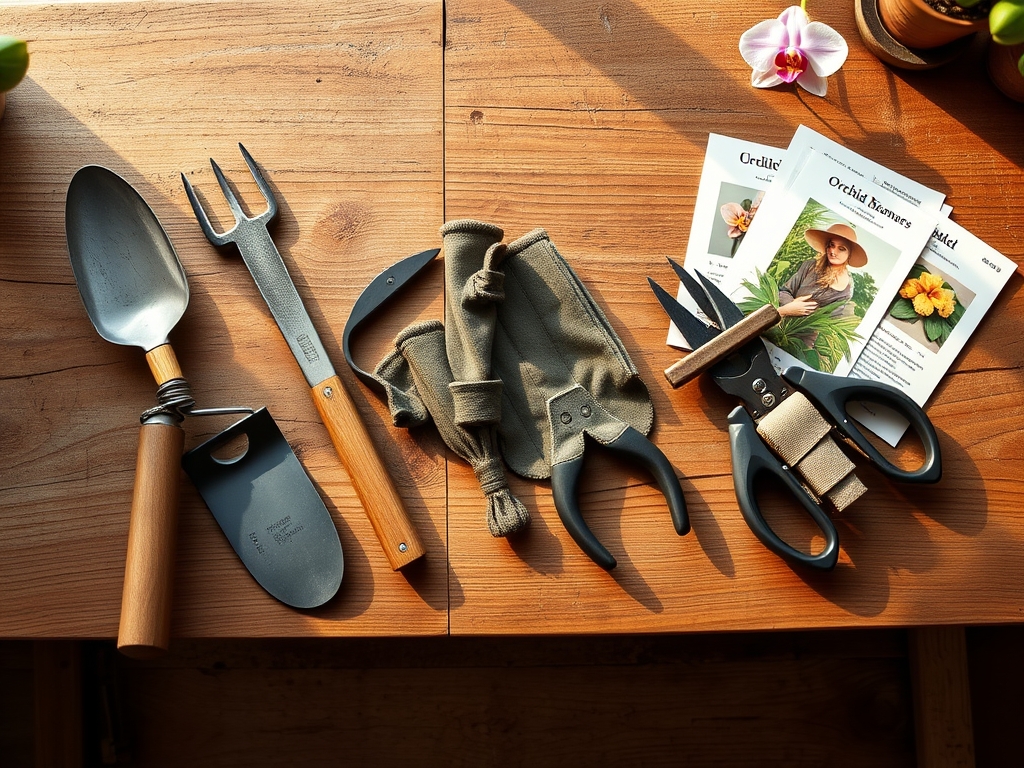
Orchids require a substrate that mimics their native canopy environment. For Phalaenopsis and Cattleya, use a coarse, friable mix of **80 percent Douglas fir bark and 20 percent horticultural charcoal**. This ensures a high Cation Exchange Capacity (CEC) while maintaining massive macropores for airflow. The target soil pH must sit between **5.5 and 6.5** to ensure nutrient bioavailability.
Fertilization requires a strict NPK ratio of 20-20-20 for general growth, or a 10-30-20 high-phosphorus "bloom booster" during the initiation of the flower spike. Always dilute to quarter-strength (approx. 125-150 ppm) to prevent salt accumulation on the sensitive velamen of the roots. Use distilled or reverse osmosis water to avoid chlorine toxicity.
Timing:
While most orchids are kept indoors, they respond to the external environmental shifts of Hardiness Zones 10 through 12. In temperate zones, the "Biological Clock" is triggered by a drop in nocturnal temperatures. To initiate the transition from the vegetative stage to the reproductive stage, Phalaenopsis require a 10 to 15 degree Fahrenheit drop in night temperatures for a period of four consecutive weeks. This thermoperiodism signals the plant to cease leaf production and begin spike emergence.
The frost-date window is critical if you move plants outdoors; never expose tropical orchids to temperatures below 55 degrees Fahrenheit. Monitor the photoperiod closely. Most orchids require 12 to 14 hours of bright, indirect light to synthesize enough glucose for a successful bloom cycle.
Phases:

Sowing and Propagation
Orchid seeds are microscopic and lack endosperm, requiring a laboratory setting with agar and specific fungal strains for germination. For the home grower, propagation usually involves "Keikis" (adventitious offsets). Wait until the Keiki has developed three roots at least two inches long before detaching it from the parent plant.
Pro-Tip: Apply a cytokinin paste to dormant nodes to stimulate growth. This works through auxin suppression, where the synthetic hormones override the plant's apical dominance to force lateral bud development.
Transplanting
Repotting should occur every 18 to 24 months or when the substrate begins to break down and acidify. Gently remove the old bark and prune dead, papery roots using sterilized bypass pruners. Position the oldest pseudobulbs against the wall of the pot to allow the new lead room to expand across the center.
Pro-Tip: Do not over-pot. Orchids prefer a "tight" root bound environment because a large volume of substrate holds excess moisture, leading to hypoxia (oxygen deprivation) in the root zone.
Establishing
Once repotted, keep the orchid in a high-humidity environment (60 to 70 percent) for two weeks. Avoid heavy watering during this phase to allow any micro-fractures in the roots to callous over.
Pro-Tip: Use a seaweed-based kelp extract during the first watering. The natural hormones encourage mycorrhizal symbiosis, which increases the surface area of the roots for better water uptake.
The Clinic:
Symptom: Limp, leathery leaves with visible shriveling.
Solution: This is a sign of low turgor pressure. Check the roots. If they are white and firm, increase watering frequency. If they are brown and mushy, the plant has root rot.
Fix-It: Remove all decayed matter and spray the remaining roots with 3 percent hydrogen peroxide. Repot in fresh, dry bark.
Symptom: Yellowing of the lower leaves (Chlorosis).
Solution: This typically indicates a Nitrogen deficiency. If the yellowing is mottled or includes the leaf veins, it may be a Magnesium deficiency.
Fix-It: Apply a balanced NPK fertilizer with added micronutrients. Ensure the water pH is not above 7.0, as high alkalinity locks out iron and manganese.
Symptom: Black, sunken spots on leaves.
Solution: This is likely a fungal or bacterial pathogen caused by standing water on the foliage.
Fix-It: Increase air circulation using a small fan. Use a cinnamon-based topical treatment on the affected area to act as a natural fungicide.
Maintenance:
Precision is the hallmark of professional orchid care. Use a soil moisture meter to verify that the center of the bark mix is nearly dry before adding water. For most five-inch pots, this equates to roughly 0.5 to 0.75 cups of water every 7 to 10 days. Never allow the "feet" of the pot to sit in standing water.
When pruning spent flower spikes, use a hori-hori knife or sterilized shears to cut one inch above the second node from the base. This encourages a secondary flush of blooms. Clean the leaves monthly with a damp cloth to remove dust, which can block the stomata and reduce photosynthetic efficiency by up to 30 percent.
The Yield:
Harvesting orchid blooms for floral arrangements requires timing the cut when the first three flowers on the spike have been open for at least three days. This ensures the vascular system of the spike is fully hardened. Cut the stem at a 45-degree angle under lukewarm water to prevent an air embolism in the xylem.
To maintain "day-one" freshness, place the cut stems in a solution with a pH of 4.0 to 5.0 and keep them away from ripening fruit. Fruit emits ethylene gas, which triggers senescence (rapid aging) and causes the flowers to drop prematurely.
FAQ:
Why are my orchid leaves turning dark green?
Dark green leaves indicate insufficient light. The plant is overproducing chlorophyll to compensate for the lack of photons. Move the orchid to a location with brighter, filtered light to encourage the leaves to return to a grassy, medium-green color.
How do I know when to water my orchid?
Observe the roots through the clear plastic liner. If the roots are silvery-grey, the plant requires hydration. If the roots are bright green, the velamen is saturated and the plant does not need water. Use a moisture meter for accuracy.
Can I use regular potting soil for orchids?
No. Standard potting soil is too dense and will cause root asphyxiation. Orchids are epiphytes; their roots require constant exposure to oxygen. Use a specialized orchid bark or sphagnum moss medium to ensure proper gas exchange in the rhizosphere.
My orchid hasn't bloomed in a year. Why?
The most common reason is a lack of temperature fluctuation. Orchids need a distinct drop in night temperatures (55-60 degrees F) for several weeks to trigger the reproductive cycle. Without this thermal cue, the plant will remain in a vegetative state.